


.jpg)
Centralized communication solves the chaos of juggling emails, texts, and calls in property management. By keeping all interactions, records, and updates in one platform, it reduces errors, speeds up maintenance responses, and simplifies financial tracking. Property managers report up to 30% less administrative work and 25% faster issue resolutions. This approach ensures better organization, fewer delays, and improved collaboration among tenants, managers, and vendors. Tools like HouseFacts make this shift easy, offering features like real-time updates, automated reminders, and shared access for just $8.25/month.
Key Benefits:
- Faster Maintenance Handling: Requests are logged, prioritized, and tracked in one place.
- Simplified Finances: AI organizes receipts, automates reports, and reduces manual work.
- Improved Collaboration: Shared access ensures everyone stays informed with real-time updates.
- Reduced Errors: Automated workflows prevent missed tasks and costly mistakes.
Switching to centralized communication makes property management more efficient and stress-free, benefiting managers, tenants, and property owners alike.
6 of the Best Real Estate Management Tools to Save You Time
How Centralized Communication Saves Time
Centralized communication brings all property-related interactions under one secure digital roof. No more juggling emails, calls, texts, and paper trails - everything is in one place. By consolidating maintenance requests, financial records, vendor communications, and property documents into a single platform, workflows become smoother and more efficient for everyone involved. With this setup, all stakeholders operate from a shared, up-to-date source of information, cutting down on wasted time and confusion.
Property managers using centralized systems have reported up to a 30% reduction in administrative workload and a 25% faster resolution of tenant issues [1][3]. This unified method not only saves time but also creates a more collaborative environment for managing properties.
Connecting All Stakeholders in One Place
A centralized platform brings homeowners, property managers, and vendors together with real-time access to shared information. This eliminates delays caused by searching for contacts or waiting for responses. For instance, when a maintenance issue arises, everyone involved can instantly view the request, track its progress, and access relevant property history.
Unlike outdated, fragmented systems, this streamlined approach ensures that everyone has access to the same, updated information. It also cuts down on redundant communication. Instead of tenants and vendors separately contacting the property manager about the same repair, the platform keeps everyone informed with real-time status updates. Vendors can review detailed property and maintenance records, allowing them to prepare more effectively, while homeowners can easily track expenses and maintain organized records for insurance or financial purposes.
This transparency builds trust and encourages teamwork. When all parties can see the same updates and task progress, misunderstandings drop significantly. Plus, having access to historical records makes it easier to make informed decisions based on past maintenance trends and vendor performance.
Reducing Delays and Miscommunication
Centralized communication doesn’t just keep everyone on the same page - it also speeds up response times and eliminates common bottlenecks. Automated notifications and clear task tracking ensure that nothing falls through the cracks. Property management companies using these systems have seen major improvements in maintenance workflows by automating ticket assignments and providing real-time updates to residents and vendors [1][4]. This not only boosts tenant satisfaction but also helps prevent small problems from turning into costly repairs.
With centralized platforms, tasks are logged, assigned, and tracked until completion - no more losing requests in email chains or text messages. Automated reminders help keep things on schedule, while detailed records hold everyone accountable. For example, centralized leasing teams can handle maintenance requests 24/7, sending automated confirmations and scheduling notifications without waiting for local managers to respond during business hours [5].
Key Benefits of Centralized Communication
Centralized communication systems bring practical advantages that directly save time and improve efficiency in property management. These systems don't just streamline processes - they create measurable improvements that benefit everyone involved, from tenants to property managers. Let’s dive into some of the most impactful benefits.
Faster Maintenance Request Handling
Centralized platforms simplify the entire maintenance process, from submission to resolution, by logging, tracking, and prioritizing every request in one place.
When a tenant submits a maintenance request, it instantly appears on the property manager's dashboard with all necessary details. These platforms can assign priorities automatically - urgent issues like plumbing leaks are flagged for immediate action, while less critical tasks are scheduled accordingly. This real-time tracking ensures that nothing slips through the cracks.
In fact, property management companies using centralized systems report resolving tenant issues 30% faster [2][4]. Additionally, these platforms provide access to property maintenance histories, reducing back-and-forth communication and unnecessary delays.
Another advantage is proactive maintenance. Automated reminders for tasks like seasonal inspections or warranty expirations help prevent minor issues from turning into expensive emergencies. This not only keeps properties in better shape but also reduces long-term costs.
And it’s not just about fixing problems - these systems also make financial tracking much easier.
Simplified Financial Tracking and Reporting
Centralized platforms bring all financial data - expenses, payments, and budgets - under one roof. This eliminates the hassle of juggling multiple spreadsheets or reconciling data from various sources.
For example, AI tools can automatically organize uploaded invoices and receipts by vendor, service type, or property. This automation reduces errors and frees up time that would otherwise be spent on manual data entry. Instead of spending hours on administrative tasks, property managers can focus on more strategic priorities.
Generating financial reports becomes a breeze. Whether it’s tracking maintenance expenses, reviewing budget performance, or preparing tax documents, all the necessary data is readily available and well-organized. Automated bill reminders also ensure that due dates aren’t missed, helping avoid late fees and keeping vendor relationships strong. For property owners, having access to a complete financial snapshot at any time is invaluable for managing insurance claims or tax filings.
Better Collaboration and Transparency
Centralized communication tools create a shared workspace where everyone - property managers, tenants, owners, and vendors - works from the same set of information. This transparency eliminates the confusion caused by outdated or conflicting details.
Features like shared calendars and document repositories keep all stakeholders aligned. For instance, when a maintenance appointment is scheduled, automatic notifications are sent to the property manager, tenant, and vendor. Contracts, maintenance records, and other key documents are easily accessible, ensuring everyone stays informed.
Role-based access controls further improve collaboration by providing the right level of visibility to each stakeholder. Property owners can review financial updates and maintenance progress, while tenants can track their requests and communicate directly with management. This balance of access and privacy fosters trust and accountability.
Ultimately, centralized systems close communication gaps, making property management smoother, faster, and more effective for everyone involved.
How HouseFacts Centralizes Communication
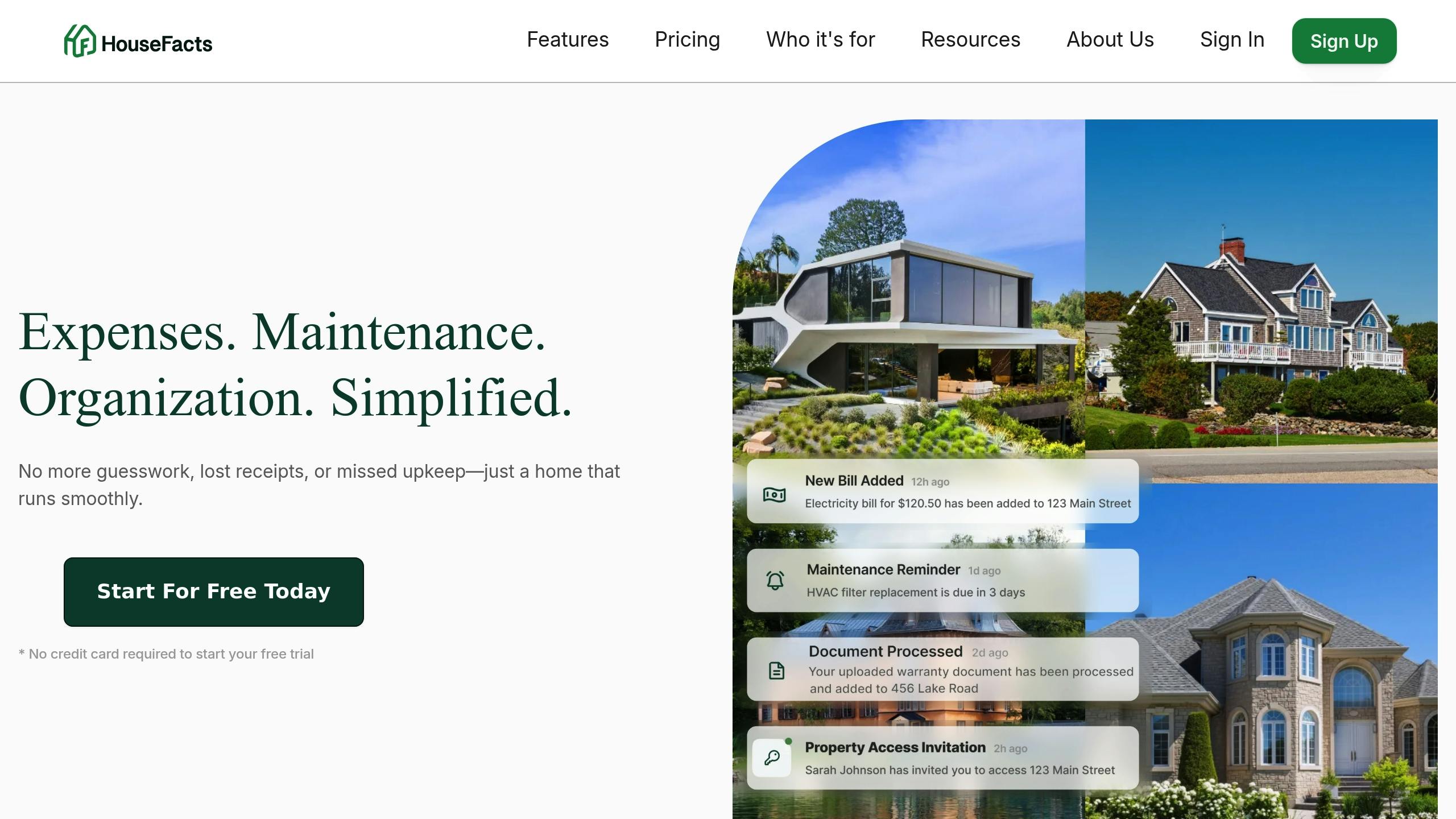
HouseFacts shows how a single platform can turn the chaos of property management into a smooth, efficient process. By bringing everything together, it tackles the scattered, time-consuming tasks that often plague property managers. This digital tool combines all property-related activities - like handling maintenance requests and tracking finances - into one easy-to-access hub. No more juggling between apps, spreadsheets, or paper records; everything you need is in one place.
Features That Save Time
HouseFacts is packed with tools designed to simplify every aspect of property management. Take its maintenance tracking system, for example. Users can submit requests, monitor progress, and coordinate with contractors - all without leaving the platform. Property managers can assign tasks, provide updates, and keep everyone in the loop without needing to switch between multiple communication channels.
On the financial side, the platform uses AI to organize receipts and invoices by vendor, service type, or property improvement. This feature cuts down hours of manual data entry to just a few clicks. Generating expense reports or preparing tax documents becomes a breeze because all your financial data is already sorted and ready to go.
Shared property calendars help streamline scheduling by managing maintenance appointments and inspections. Automatic notifications take care of reminders, reducing the need for endless back-and-forth emails or calls. Plus, the platform sends alerts for maintenance deadlines, warranty expirations, and upcoming bills, helping you avoid costly surprises.
Organizing Property Management in One Place
HouseFacts also excels at keeping everything organized. All property data - documents, bills, receipts - can be securely uploaded and stored in one place. Authorized users can access these records anytime, ensuring that everyone stays informed and on the same page. This setup helps avoid the miscommunication and administrative headaches that often come with managing multiple properties.
The platform uses role-based access controls, so tenants, property owners, contractors, and managers only see the information they need. Contracts, maintenance records, warranties, and other important files are stored in a searchable format, making it easy to find what you’re looking for - whether it’s for a contractor’s reference or an insurance claim.
Centralized vs. Fragmented Communication Comparison
When you stack centralized communication against fragmented systems, the benefits of a unified approach become crystal clear. Property managers who make the switch from scattered channels to a single platform often see measurable improvements in their day-to-day operations.
Centralized communication systems clearly outperform fragmented ones in every critical area. For example, maintenance requests can be handled in minutes because there's no need to sift through multiple emails or apps. Standardized workflows and automation also help minimize errors and miscommunication. Tasks like scheduling, sending notifications, and generating reports can be automated, cutting administrative workloads by as much as 30%.
Tenants, property managers, and property owners all benefit from centralized systems. Clear communication channels reduce stress, while real-time data access improves transparency and understanding of property performance.
Cost savings are another major advantage. With fewer staffing needs, reduced duplicate services, and lower administrative overhead, centralized systems help companies decrease operational expenses while improving service quality. Achieving this balance is a challenge for fragmented communication setups.
Real-world results drive home these points. One property management firm, for instance, reduced maintenance response times by over 50% after implementing a centralized system. This not only boosted resident satisfaction but also allowed staff to oversee more properties without hiring additional employees. These kinds of outcomes highlight the efficiency and effectiveness of centralized communication in property management.
Conclusion: The Time-Saving Power of Centralized Communication
Centralized communication takes the chaos out of property management, turning what often feels like a juggling act into a more organized and efficient process. With everyone - property managers, homeowners, and service providers - operating on the same platform, response times improve, mistakes are minimized, and administrative tasks become more manageable. This means property managers can oversee more properties without needing additional staff, while homeowners enjoy better visibility into their investments.
Switching from scattered communication methods to a centralized system saves time in practical, measurable ways. Maintenance requests can be resolved in minutes rather than hours. Automated reports eliminate the need for manual data entry. Proactive reminders prevent costly oversights. These day-to-day efficiencies lead to happier tenants, improved financial management, and smoother operations overall.
Centralized systems also promote transparency and accountability. With real-time access to information, all parties can track progress, review historical records, and collaborate seamlessly. This shared visibility not only reduces misunderstandings and delays but also builds trust among everyone involved. It’s a win-win for property managers, homeowners, and tenants alike.
Key Takeaways
For property managers and homeowners, adopting centralized communication delivers four major benefits: quicker response times, easier financial tracking, less administrative work, and better collaboration.
Making the switch from fragmented systems to a centralized platform does take some planning, but the results are well worth it. Start by evaluating your current communication processes and choose a platform that meets all your property management needs. Tools like HouseFacts bring everything together - home details, finances, maintenance tracking, and collaboration features - into one easy-to-use system.
For just $8.25 a month (billed annually), users gain access to automated organization, proactive task reminders, centralized financial tools, and more. Instead of relying on mental to-do lists and scattered spreadsheets, you’ll have everything at your fingertips, keeping all stakeholders connected and informed.
Ultimately, centralized communication isn’t just about working faster - it’s about working smarter. When property management becomes more organized and transparent, everyone benefits. Managers can focus on growing their portfolio, homeowners gain better control over their investments, and tenants receive faster, more reliable service. It’s a smarter way to manage properties that ensures everyone comes out ahead.
